← 返回作品 / Back to index
The Last Vintage最后的佳酿
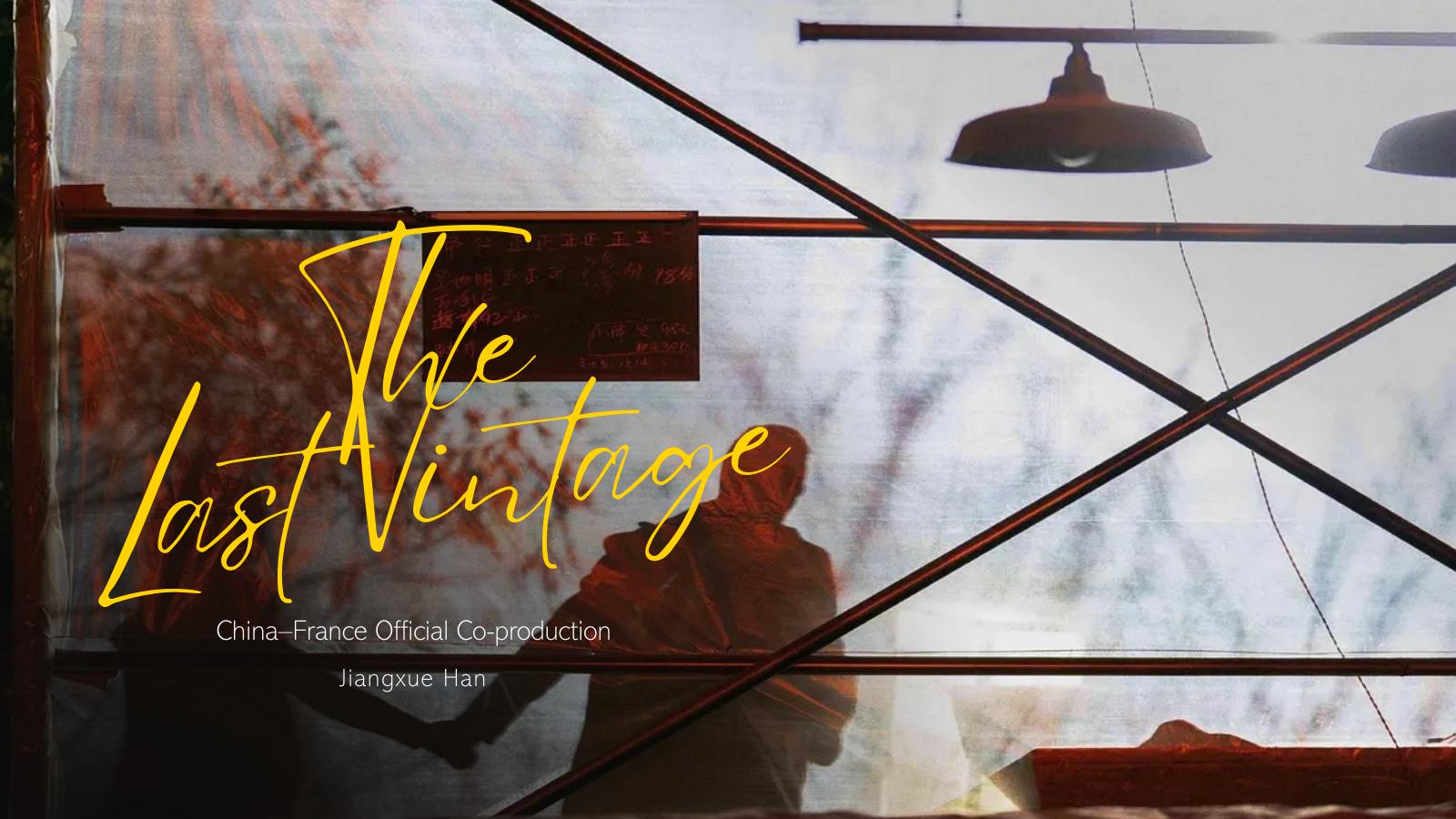
Original coursework cover; official co-production status is proposed
让创意、资金与市场彼此支撑Connecting the story, financing and market
一位疲惫的法国葡萄酒营销人与宁夏酿酒师,为寻找一批失踪的葡萄酒踏上西北旅程。个人合拍提案将跨文化故事、目标受众、资源组合与发行路径放进同一个开发框架。
A disillusioned French wine marketer and a Ningxia winemaker travel across northwestern China in search of a missing batch of wine. This individual proposal brings together a cross-cultural story, audience positioning, resources and distribution within one development framework.
我的参与 / My involvement
以个人课程作业形式完成合拍提案与融资方案研究。原 deck 中的融资、预售和合作设定均属于作业假设,不代表实际到账、签约或官方认证。
Developed the co-production pitch and finance research as individual coursework. Financing, pre-sales and partnership assumptions in the original deck are hypothetical, not secured funding, signed agreements or official approval.
从合作条件倒推题材
Developing a story backwards from the co-production framework
这个项目不是先写好故事再寻找海外伙伴,而是从课程要求出发:在与中国有官方电影合拍条约的国家中选择合作对象,再开发能够成立的合拍题材。取得所需认定并满足两国规则后,官方合拍可获得相应国产片待遇,具有区别于普通进口片的市场进入路径;与海外伙伴合作,也可以连接当地发行、院线、碟片和流媒体等收入渠道,并研究双方可能适用的支持机制。法国勃艮第与中国宁夏的葡萄酒文化,为这套结构提供了具体的故事交点。地域拍摄支持与文化、产业合作资源也是考察方向,但题材相关并不等于已取得资助。
Rather than starting with a finished story, this coursework began by selecting a partner country with an official film co-production treaty with China. Subject to approval and the relevant rules, treaty co-production can offer national-film treatment and a different route to market from ordinary imports. Overseas partners can also connect theatrical, home-video and streaming distribution and help investigate eligible support. Wine cultures in Burgundy and Ningxia supplied a concrete narrative meeting point. Regional filming and cultural-industry support were research possibilities, not secured funding.
让资源组合接受故事检验
Test the resource structure against the story
这种倒推不是为了把两个国家生硬地放进同一部电影,而是检验:人物为何跨越两地、葡萄酒如何推动冲突、双方的创作与制作贡献是否真实必要?基金资格、融资结构与发行假设需要共同支撑同一个故事。
Working backwards does not mean forcing two countries into one film. It means asking why the characters cross borders, how wine drives the conflict and whether both partners make necessary creative and production contributions. Eligibility, financing and distribution assumptions must support the same story.
政策背景 / Policy reference: CNC · 中法合拍协定 / China–France agreement ↗
02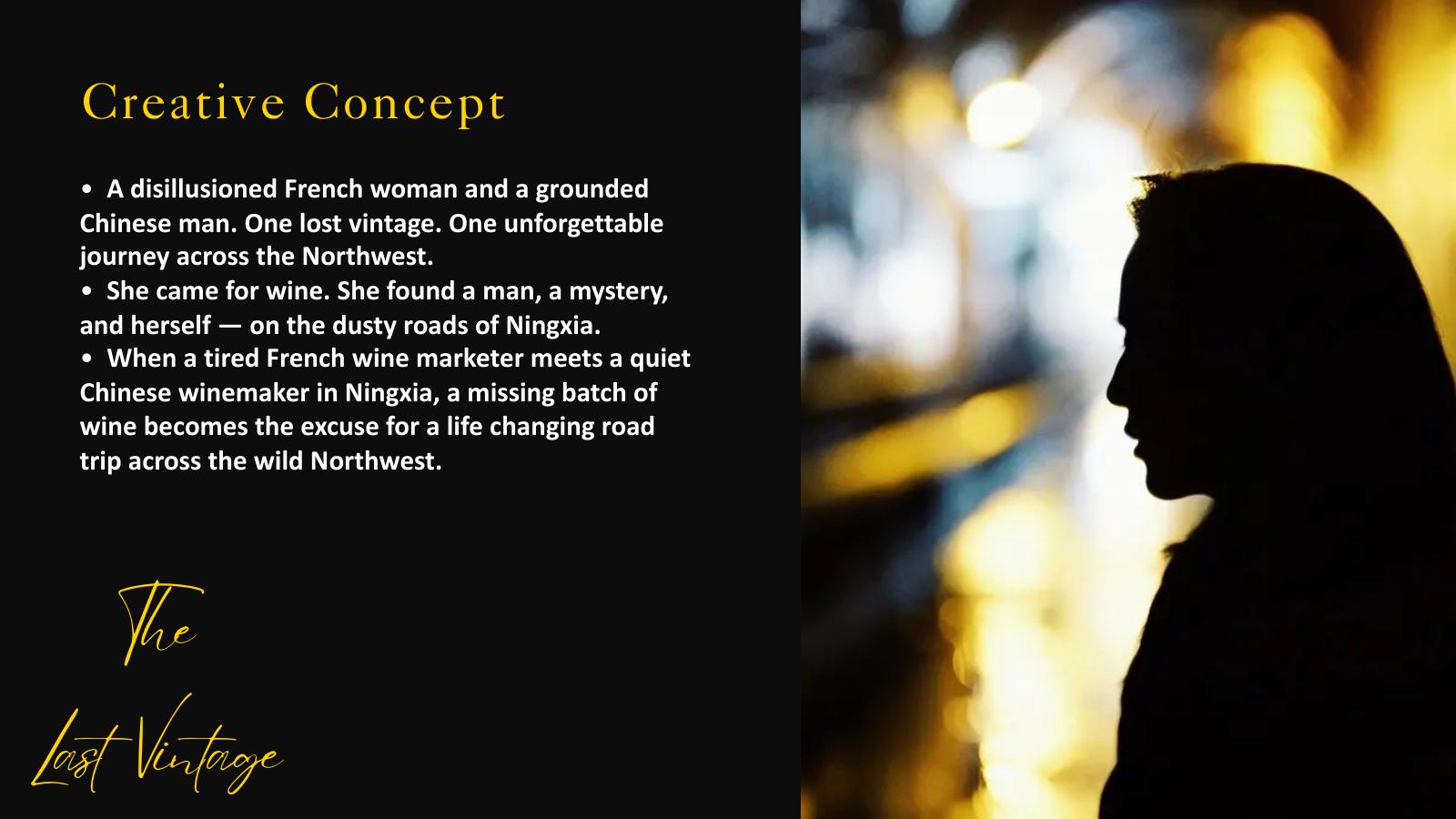
Original individual proposal: creative concept
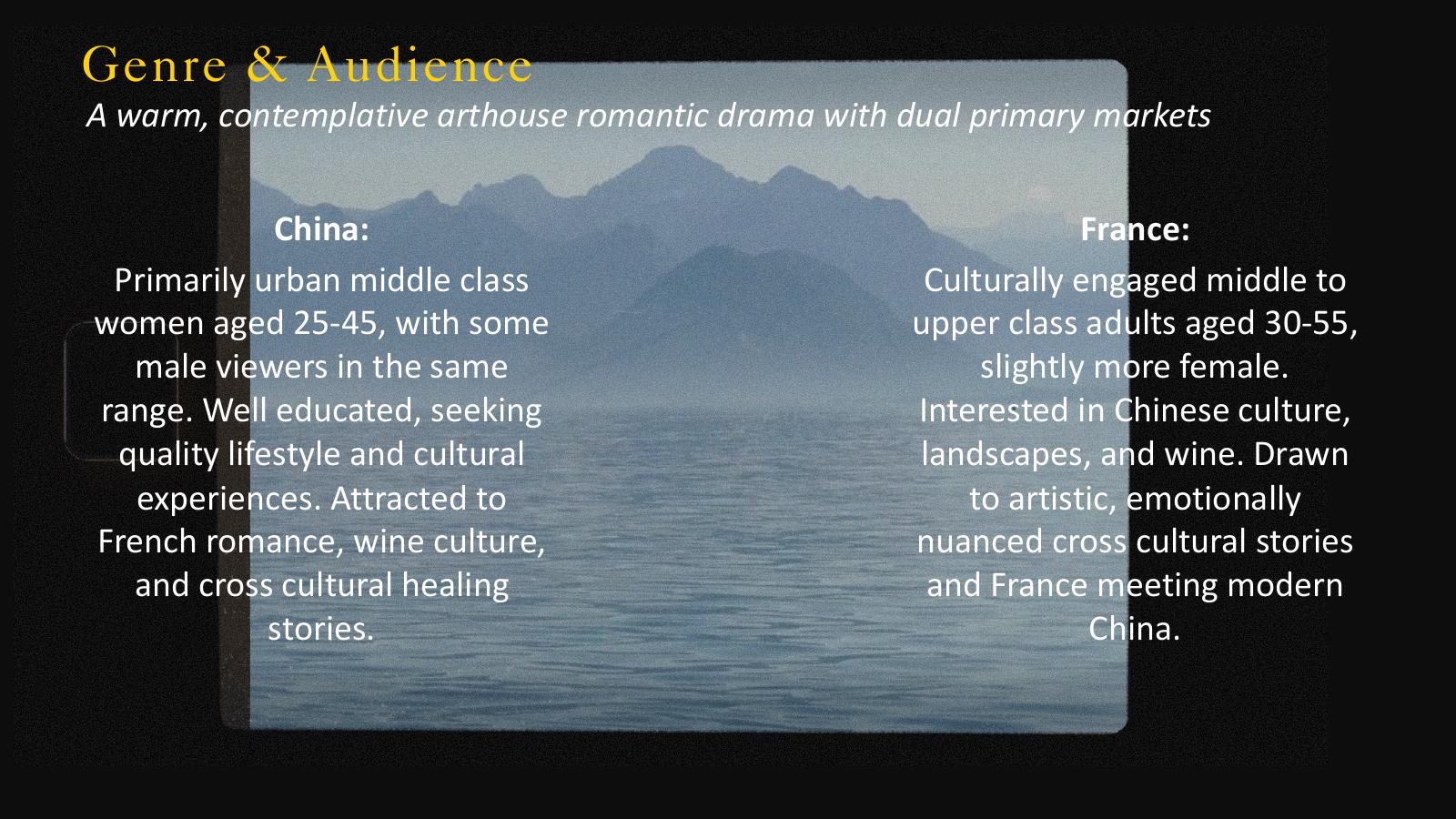
Original individual proposal: audience hypotheses, not validated market outcomes
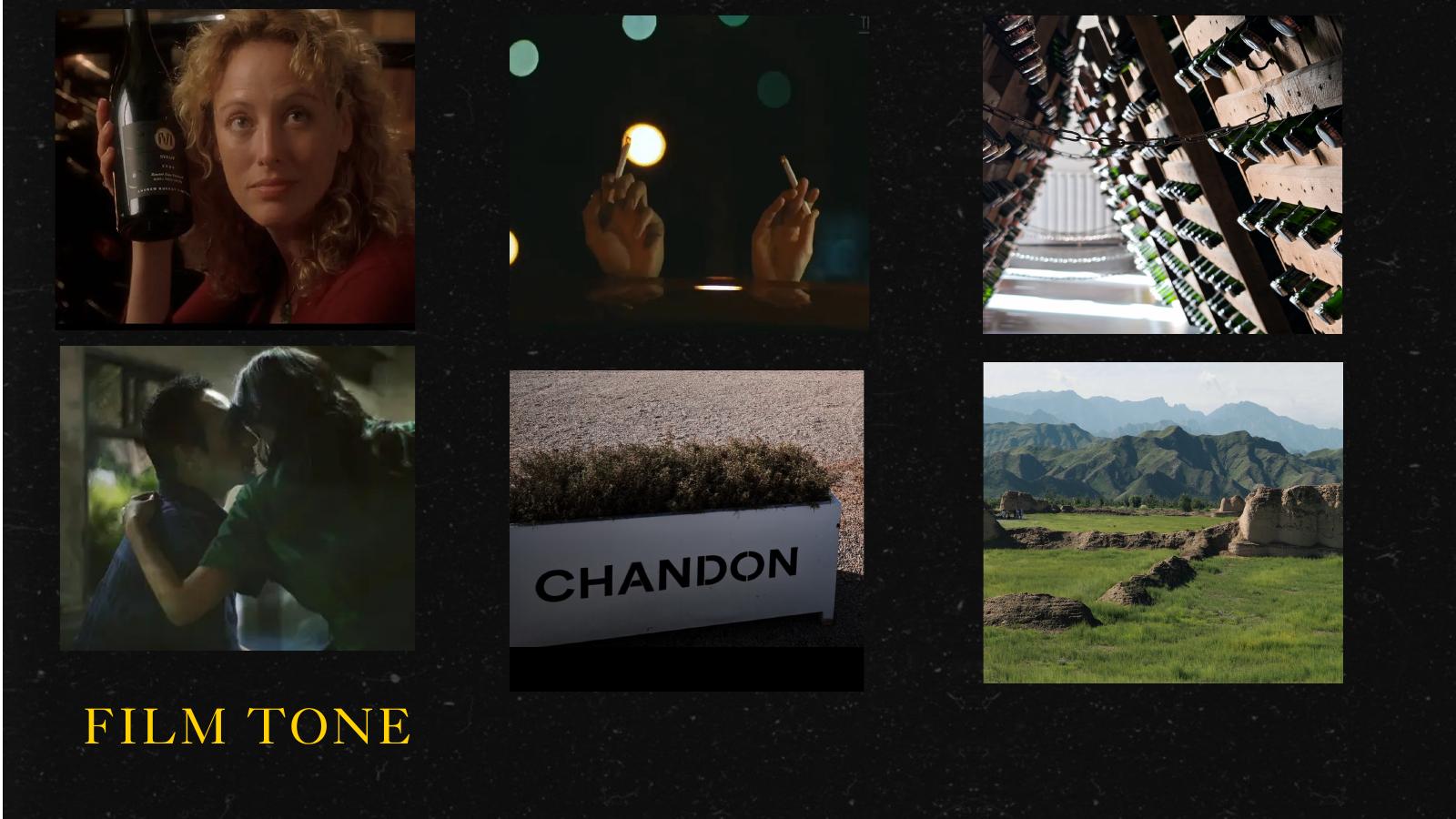
Visual references from the pitch, not production stills from this project
为什么大家会喜欢拍合拍片?
开发《The Last Vintage》时,我先面对的不是故事,而是一组合作条件:课程要求从与中国有官方合拍条约的国家中选择伙伴,再开发题材。这让我第一次清楚地意识到,电影创意有时也会从融资结构、市场进入方式和伙伴资源中反向生长。
合拍的吸引力,在于让一个项目连接多个体系。满足条约和主管机构要求的官方合拍,可能获得双方相应的国产片待遇与支持资格。对中国市场而言,这与普通进口片的进入逻辑不同;但认定、发行和收益安排仍须符合适用规则,不能把“合拍”当作自动通过准入或拿到补贴的保证。
另一个重要原因是发行。海外合作方不仅可能出资,也可能熟悉当地的院线、销售代理、电视与流媒体采购,帮助项目找到不同地区的观众。院线、碟片及流媒体版权收入构成可研究的回收渠道,实际价值则取决于权利划分、发行合同与市场需求。多一个国家,不等于自动多一份票房。
在这个基础上,我把目光放在法国勃艮第与中国宁夏。葡萄酒既是两地共享的文化与产业经验,也是人物相遇、价值观冲突和旅途展开的理由。地域拍摄支持、电影基金及相关合作资源值得研究,但需要逐项验证申请主体、文化要求与支出条件,而不是把两地资金简单相加。
合拍也带来额外成本:不同语言、审批节奏、预算体系、创作意见和发行目标,都需要协调。真正值得合作的项目,应当说明双方各自补足了什么,以及为什么这些贡献不能被轻易替代。对我而言,这次倒推式开发最有价值的地方,是让商业条件成为创意的约束与启发,同时仍让故事保有自身的必要性。
Why do filmmakers choose co-production?
The Last Vintage began with a set of conditions rather than a finished story: choose a country with an official co-production treaty with China, then develop a suitable project. It showed me how financing structures, routes to market and partner resources can also generate creative ideas.
Co-production can connect a project to more than one system. Subject to treaty conditions and approval, it may provide national-film treatment and access to relevant support. This differs from an ordinary import route, but approval, distribution and revenue arrangements still have to satisfy applicable rules. The label does not guarantee access or funding.
Distribution is another attraction. A partner may bring knowledge of local cinemas, sales agents, broadcasters and platforms, not only capital. Theatrical, home-video and streaming rights offer potential revenue channels, whose value depends on rights allocation, contracts and audience demand. Another country does not automatically mean another box-office success.
Burgundy and Ningxia offered a shared wine culture and industry from which characters, conflict and a journey could develop. Regional production support and film funds were possibilities to investigate, with applicant, cultural and spending criteria to be tested individually rather than simply adding two countries’ funds together.
Co-production also adds coordination costs: language, approval schedules, budgets, creative decisions and release goals. A worthwhile collaboration must explain what each partner contributes and why those contributions matter. This exercise let commercial conditions both constrain and inspire the idea, without replacing the need for a coherent story.